
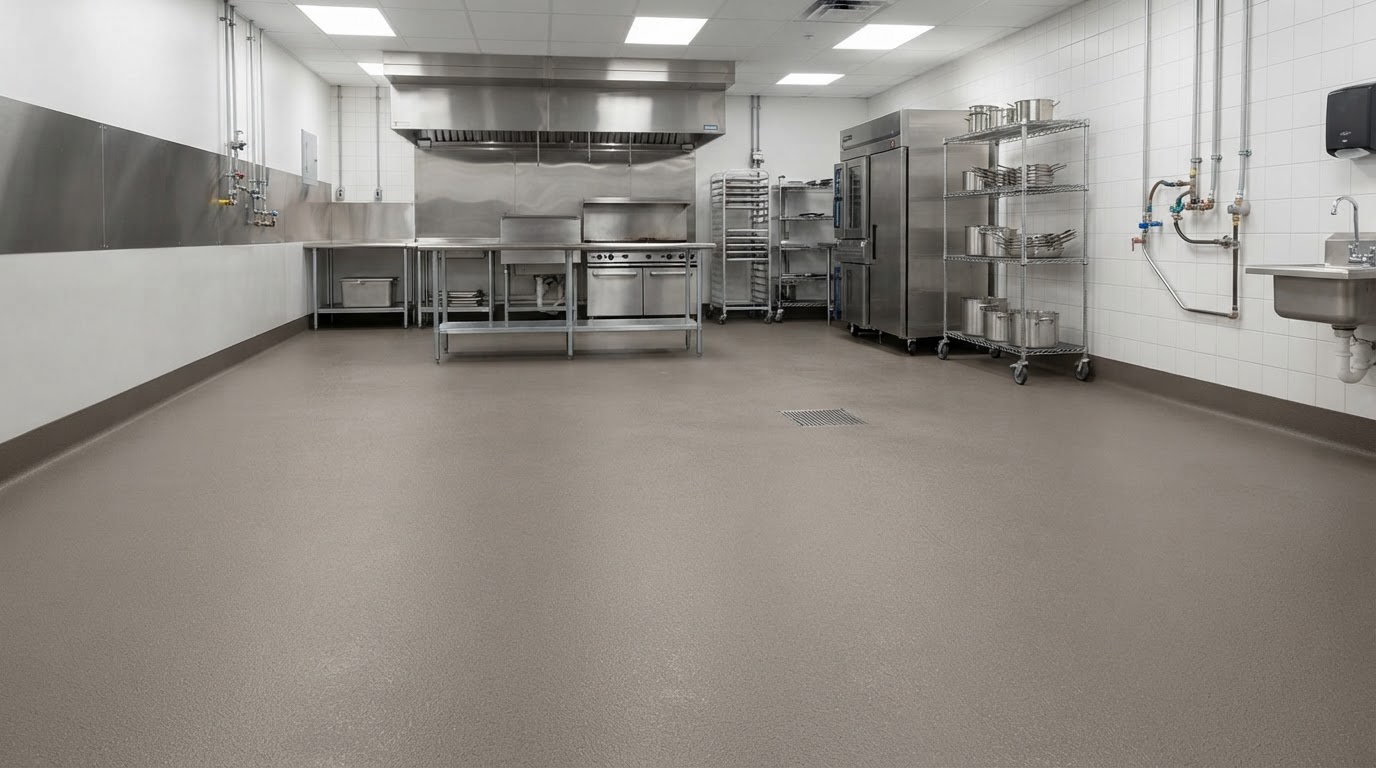
Thermal Shock
Standard epoxies can crack when a hot washdown hits a cool floor — the temperature swing (thermal shock) stresses the film. Urethane cement is engineered to take that thermal shock without cracking, which is why it's the standard in commercial kitchens and food processing.
Chemical and Cleaning Resistance
Both resist chemicals, but urethane cement tolerates the aggressive sanitizers, hot-water washdowns, and heavy cleaning that degrade standard epoxy over time. In a kitchen or processing facility, the cleaning regimen is what breaks the wrong floor.
Cost and Where Each Belongs
Epoxy is the more affordable general-purpose coating and is right for garages, showrooms, and light commercial use. Urethane cement costs more because of the performance and the installation, but it outlasts epoxy in demanding conditions. Specifying epoxy where urethane cement is needed wastes the investment when the floor fails early.
Making the Choice
The right system is dictated by the environment — the thermal exposure, the cleaning regimen, the traffic, and the chemicals. We assess the facility before recommending either. A floor specified to the wrong conditions is the most expensive one, regardless of the per-square-foot rate.
Urethane Cement vs. Epoxy at a Glance
| Feature | Urethane Cement | Standard Epoxy |
|---|---|---|
| Thermal shock | Engineered to handle it | Can crack under thermal shock |
| Hot washdowns | Handles them | Can degrade with hot washdowns |
| Aggressive cleaning | Tolerates sanitizers well | Can degrade over time |
| Typical environment | Kitchens, food processing, heavy industrial | Garages, showrooms, light commercial |
| Cost | Higher — performance-driven | Lower — general-purpose |