
Why It's Specified, Not Chosen by Price
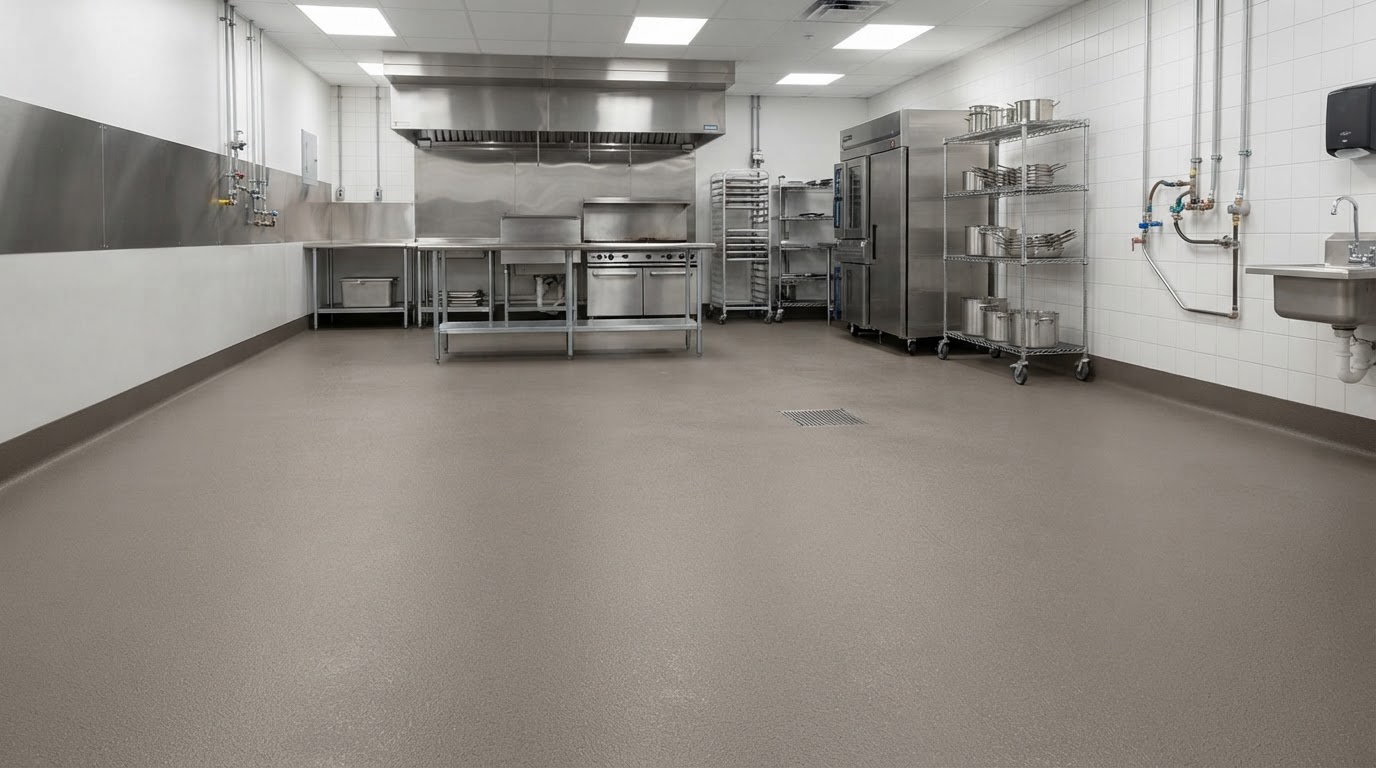
Urethane cement is specified to the demands of the environment — thermal shock from hot washdowns, chemical exposure, heavy traffic, and sanitation requirements. The cost is driven by the system thickness, the condition of the slab, and whether coved wall transitions are required.
The Factors That Change Cost
The thickness specified for the traffic and thermal load changes the material cost. A slab needing extensive prep — removing old coatings, repairing damage, or addressing moisture — adds labor. Cove bases add both material and labor, since the system is carried seamlessly up the wall.
Where the Investment Pays
In commercial kitchens, food processing, breweries, and manufacturing, urethane cement outlasts standard epoxy under conditions that would crack and degrade a cheaper coating. The upfront cost is higher, but the lifespan in a demanding environment is the value.
Getting an Accurate Quote
We assess the facility, the thermal and chemical exposure, the traffic, and the slab before recommending a system thickness and finish. A urethane cement floor specified to the wrong conditions fails early, so the assessment is what makes the cost accurate — and the floor durable.