
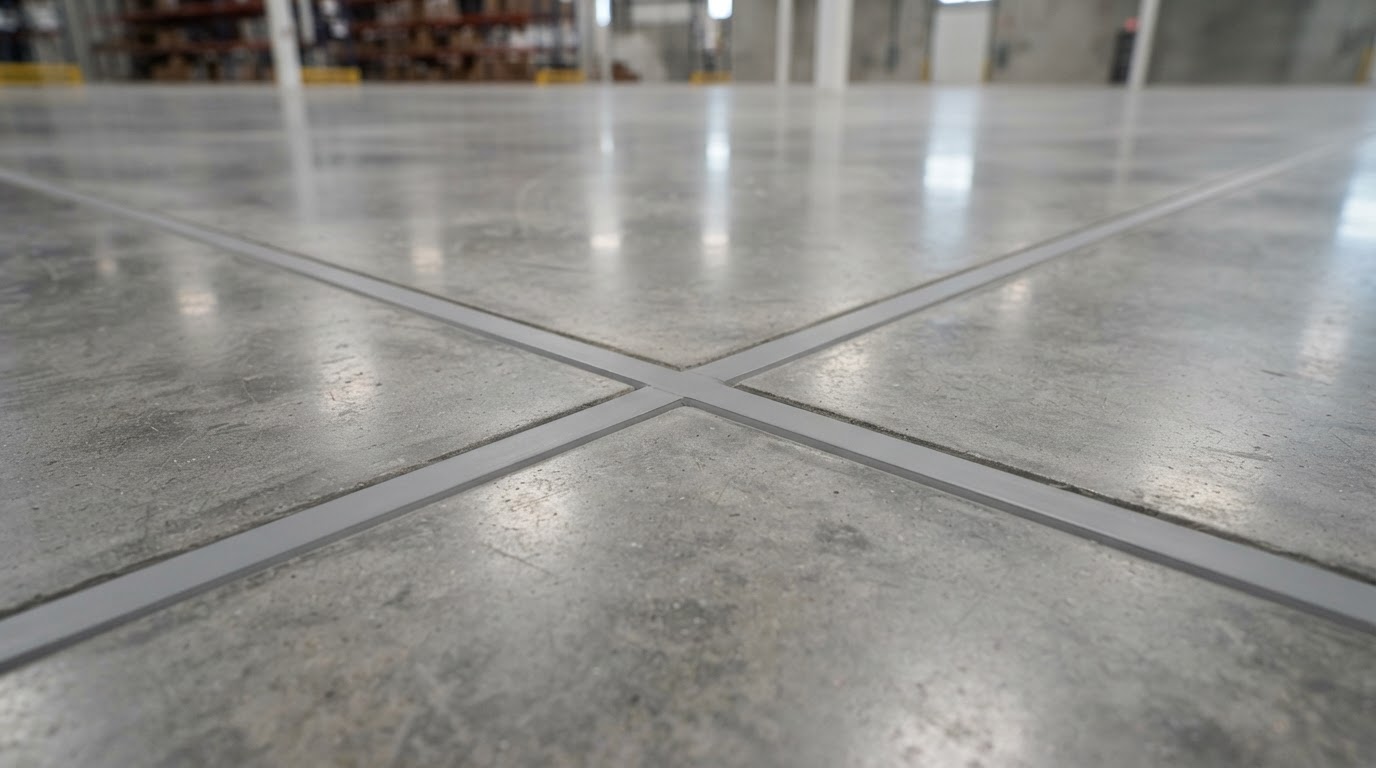
What a Joint Is
Control joints and construction joints are intentional. They're cut or formed into the concrete to create a controlled weak point so the slab cracks where you want it to, instead of randomly. Joints are designed to move slightly as the concrete expands and contracts, and they need a filler that protects the edges without locking them rigid.
What a Crack Is
A crack is an unintended break, often from stress, settlement, or shrinkage. Cracks can indicate a structural issue that needs to be addressed before any coating or resurfacing goes over them. Repairing a crack means stabilizing and addressing the cause, not just filling the gap.
Why They're Treated Differently
Joint filling uses a semi-rigid filler that protects the joint edges from spalling under traffic while letting the joint move as designed. Crack repair addresses the underlying issue and stabilizes the concrete. Filling a joint with a rigid material can lock it and cause it to fail; ignoring a crack and just filling it can leave a structural problem unaddressed.
Getting It Right
We assess the joints and any cracks before specifying a repair. Joints get the right filler for the traffic. Cracks get evaluated for cause and repaired properly. Doing both right is what makes the floor — and any coating or polish over it — perform.