
How They Work
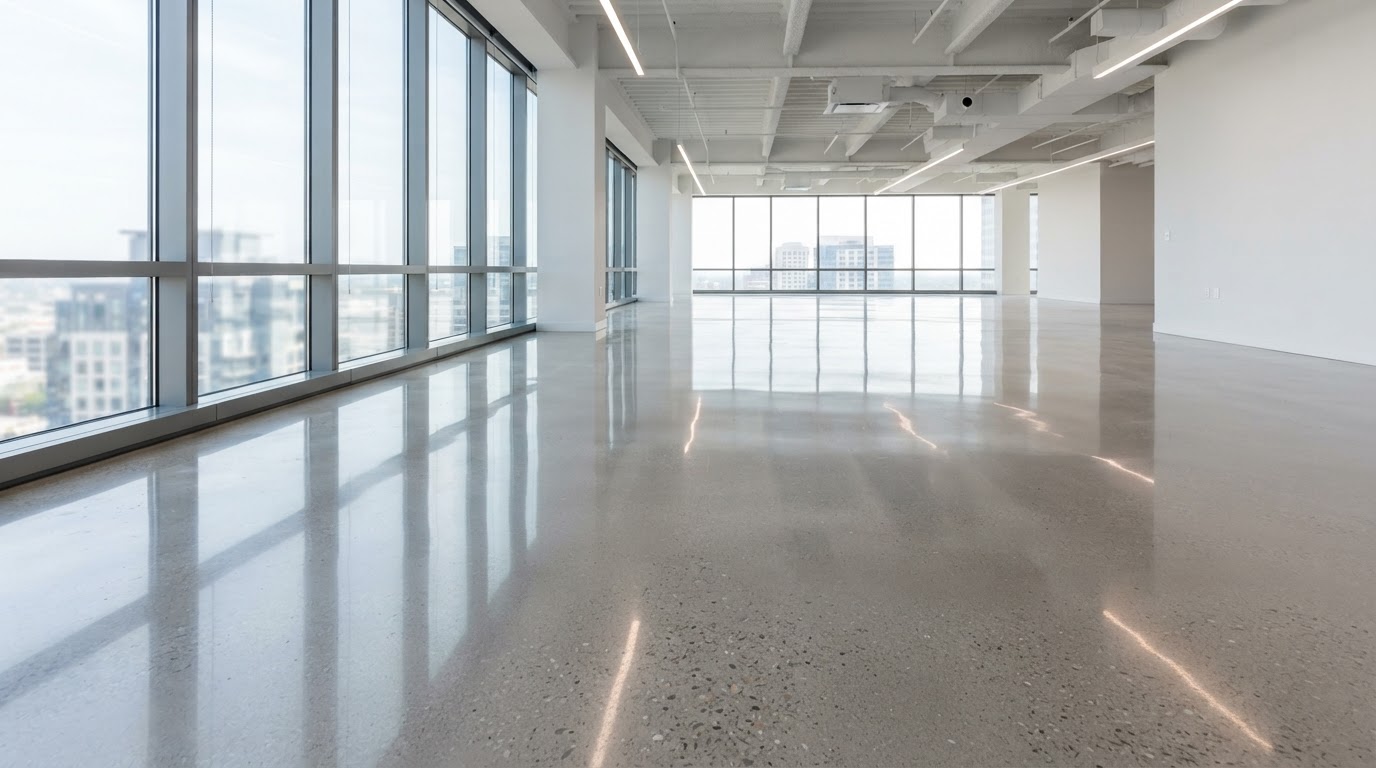
Epoxy is a coating — a film that sits on top of the concrete to protect it. Polished concrete is the concrete itself, ground and densified to a smooth, hard, reflective surface. One adds a layer; the other refines what's already there.
Maintenance
Polished concrete needs the least upkeep — sweeping and occasional cleaning, with no recoating cycle. Epoxy resists stains and chemicals well, but the coating can eventually wear and may need reapplication. If you want a floor you never recoat, polishing is the lower-maintenance choice.
Appearance
Epoxy can be decorative — flake chips, metallic pigments, solid colors — and hides slab imperfections. Polished concrete shows the concrete's actual character, color, and aggregate, which some people love and others want covered. Both can be high-gloss.
Where Each Wins
Choose epoxy for garages, workshops, and spaces where stain and chemical resistance matter and a decorative finish is wanted. Choose polished concrete for retail, warehouses, and homes where a low-maintenance, dust-free, reflective floor is the priority. We assess the slab to recommend the right one.
Epoxy vs. Polished Concrete at a Glance
| Feature | Epoxy Coating | Polished Concrete |
|---|---|---|
| How it works | Film coating over the concrete | The concrete itself, ground and densified |
| Maintenance | Sweep and mop; may need recoating | Sweep and clean; no recoating cycle |
| Stain resistance | High | Good; depends on guard/densifier |
| Appearance | Decorative — flake, metallic, solid | The concrete's natural character and aggregate |
| Best for | Garages, workshops, stain-heavy use | Retail, warehouses, low-maintenance interiors |