
What Drives the Price
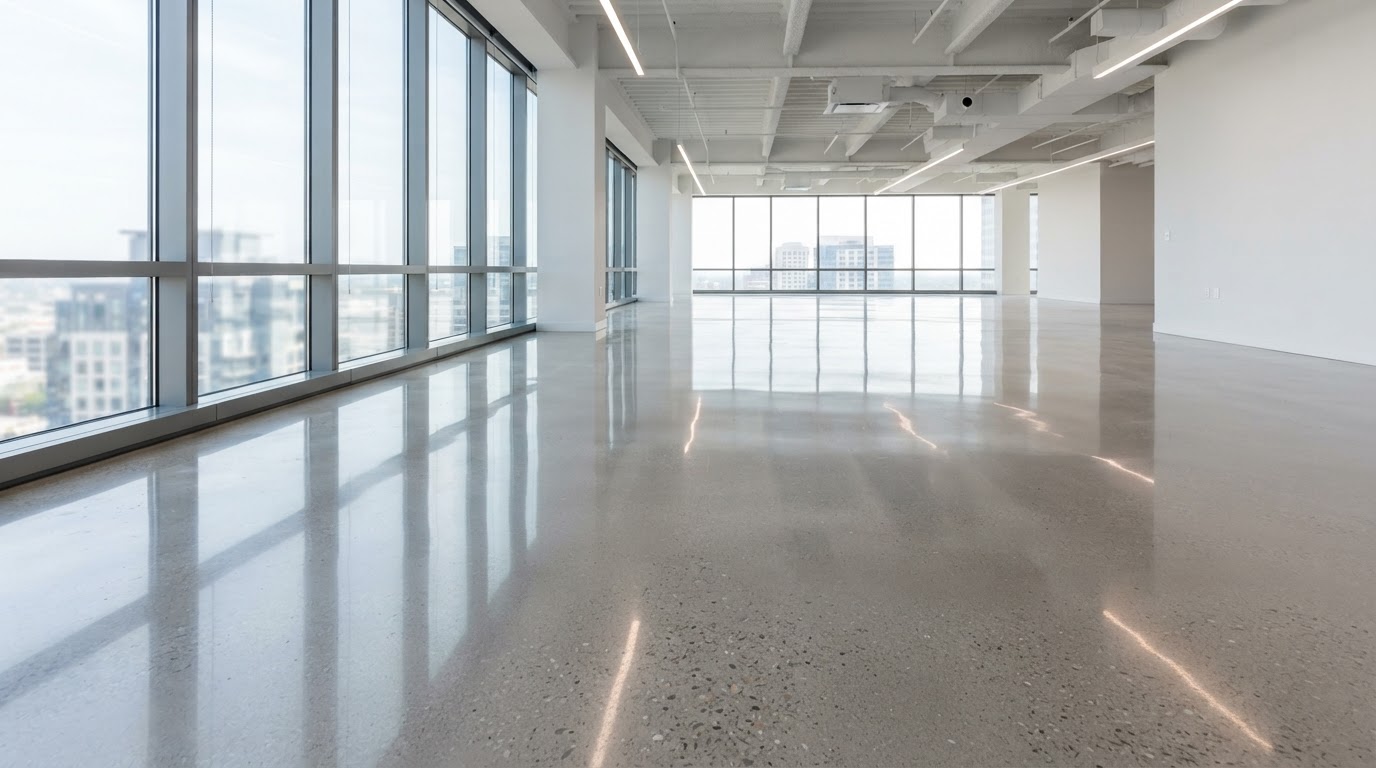
The level of polish — a low satin versus a high-gloss mirror — changes the number of grit passes required, which changes the labor. A larger area spreads the setup cost over more square footage. And the slab's condition matters: a floor needing existing-coating removal, crack repair, or extensive grinding costs more than a clean, bare concrete surface.
Square Footage and Scale
Like most floor work, polishing has setup costs that don't shrink with the floor. A small residential entry costs more per square foot than a large warehouse, where the per-square-foot rate drops with scale.
Slab Condition and Prep
Polishing is a grinding process — it removes what's on top and refines what's underneath. Existing coatings, mastic, or deeply stained concrete take more grinding to get past, adding labor. A sound, clean slab polishes more efficiently.
Getting Your Number
We assess the slab, the area, and the sheen you want, then give you a written quote. Polished concrete is priced by the specifics of the floor, not a flat rate, so an on-site look is the only way to know the real cost.